
| International Headquarters: 3 Ekeh Street (Opposite Catholic Church) Okpara Inland, Ethiope East LGA, Delta State, Nigeria P. O. Box 652 Effurun, Delta State, Nigeria United States Office: 935, Centennial Avenue, North Baldwin, NY 11510-1916 Telephone Enquiries: +234 (0)7060647530, +234(0)8103108064 Websites: www.waado.org; urhobodigitallibrarymuseum.com Email: uhshqtrsecretary@gmail.com |
Call for Nominations for
URHOBO SERVICE AWARDS 2024
Urhobo Historical Society (UHS) is calling for nominations of deserving Urhobo men and women to be chosen for all categories of the Urhobo Service Awards during its forthcoming 13th Annual Conference & General Meeting that will be held on July 26-27, 2024, at the New York University (NYU) STERN School of Business, 44 West, 4th Street, New York, NY 10012, USA. The Conference theme, “Aspects of Urhobo Culture: Folklore, Poetry, Music, Language, Cosmology and Religion”.
Please complete the nomination form (no later than May 31, 2024) via https://surveyheart.com/form/65fd5ad132732b6c93b24cec and attach a brief biography of your nominee and reasons why he/she should be selected.
| Click on the link to fill the nomination form for your nominee: https://surveyheart.com/form/65fd5ad132732b6c93b24cec |
Background History of the Awards:
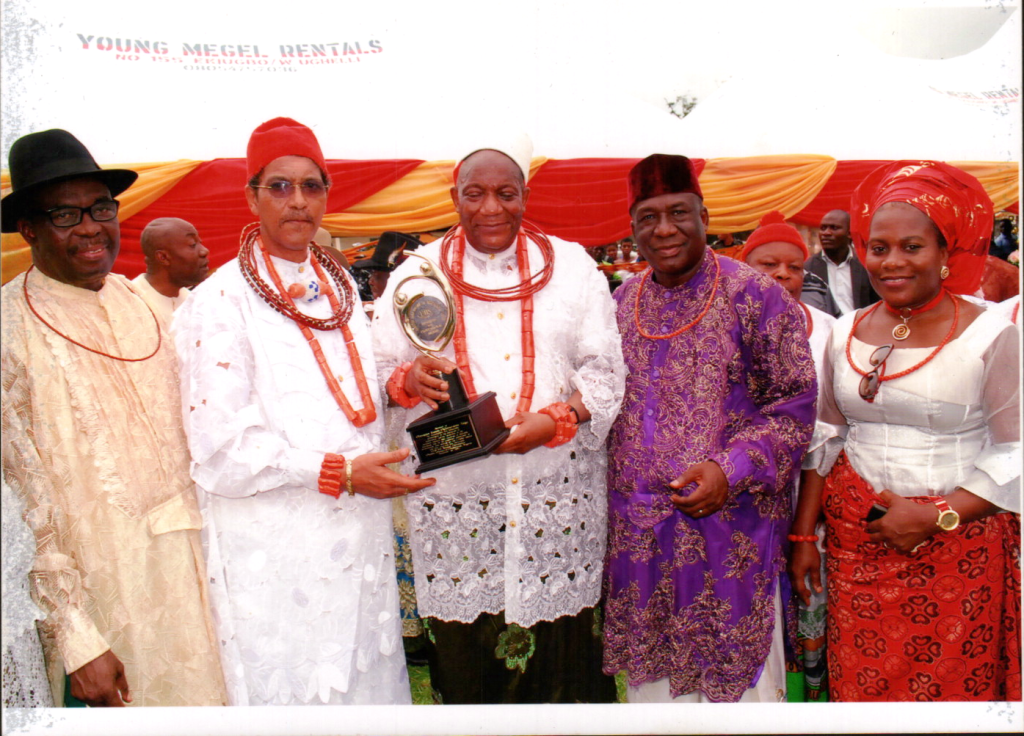
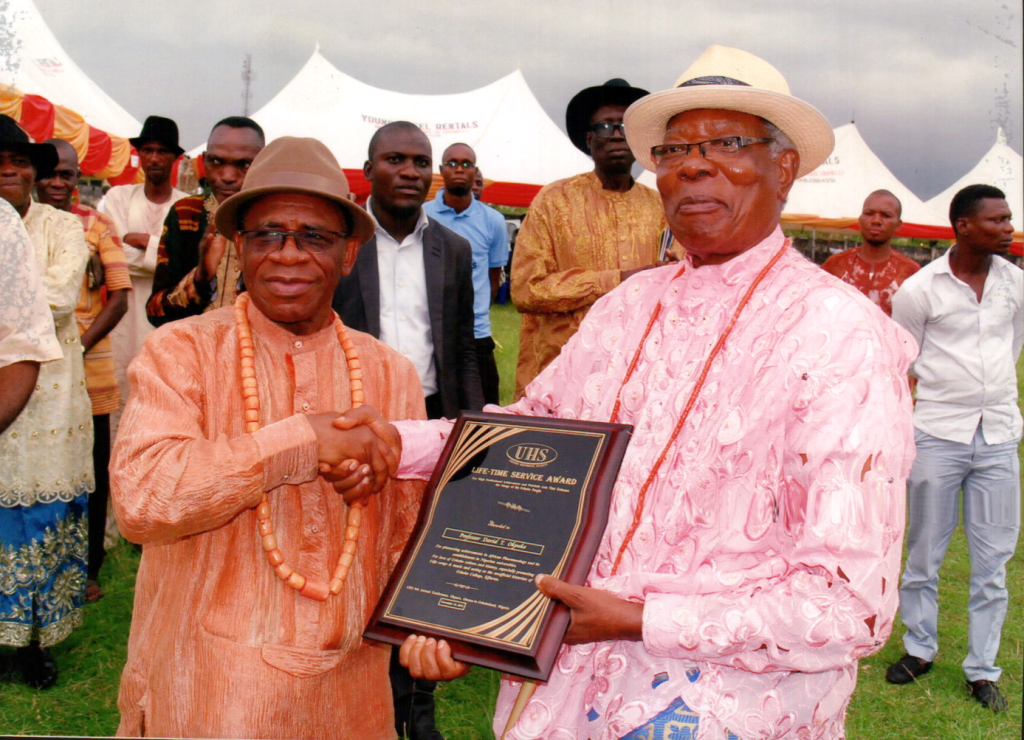
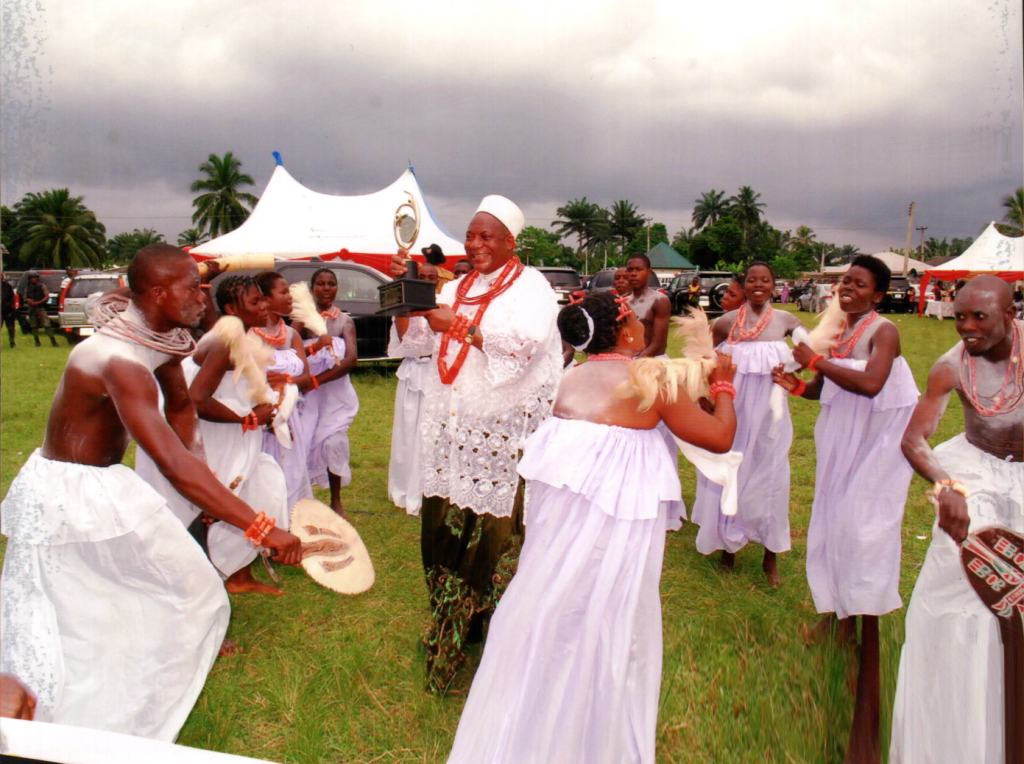
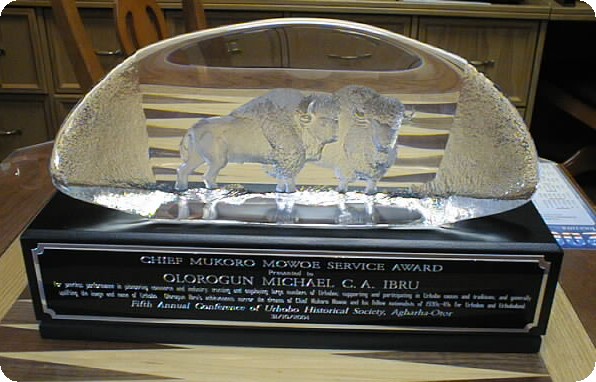
The Third Annual General Meeting of Urhobo Historical Society, which was held in London, United Kingdom, on November 3, 2002, created five categories of awards that were named in honour of eminentUrhobos who served Urhobo history, culture, and people in significant ways. The first awards ceremony was held at the Fifth Annual Conference of the Society at Agbarha-Otor on October 31, 2004. Chief Mukoro Mowoe Service Award was given to Chief Michael Ibru; Dr. Chief F. E. Esiri received Omohwovo Okoro Co-Leadership Award; Chief P. A. Wanogho, from London, U.K. received Agbotanren Udih Diaspora Award; Professor F. M. A. Ukoli received M. G. Ejaife Education Service Award; and Chief Daniel A. Obiomah received Adogbeji Salubi Urhobo History Award.
At the Sixth Annual Conference, which was held at Effurun in October 2005, two additional awards were created. They were the Omokomoko Osokpa and Ogute Otan (joint) Urhobo Music Award and M. O. Ighrakpata Urhobo Language Award. At that conference two awards were given: Professor Joseph Akpokodje received the Agbotanren Udih Diaspora Award while Mrs. Rose Inisiagho received the M. G. Ejaife Education Award. At the Seventh Annual Conference in 2006, Professor Obaro Ikime received the M. G. Ejaife Education Service Award; Mr. Johnson Adjan received Omokomoko/Ogute Urhobo Music Award; Chief D.O. Ohwovoriole receivedIghrakpata Urhobo Language Award, while Chief Johnson O. Omajowa and Chief Humphery Idisi jointly receivedAgbotaren Udi Diaspora Service Award. At the Eight Annual Conference in 2009, Chief Johnson Ukueku received the Chief Mukoro Mowoe Award; Chief Edwin Clark received the Omorohwovo Okoro Leadership Service Award; Professor Onigu Otite and Professor Reverend Samuel Erivwo both received the Adogbeji Salubi Urhobo History Award, and Reverend Canon Joseph Oghenekaro received the Ighrakpata Urhobo Language Award. At the ninth Conference in 2014, two additional awards were created. These were the Ezekiel N. Igho Science Award and the David Dafinone & Michael Ibru Business and Professional Award. The latter was awarded to Olorogun Moses O. Taiga at that conference. At the Tenth Annual Conference in 2015, two additional awards were created. These are the Alice Obahor Outstanding Urhobo Women Award and the Distinguished Urhobo Young People Award.
| Awards (Year Created) | Recipients (Year of award) |
| Chief Mukoro Mowoe Service Award (2002) | Chief Michael Ibru (2004) Chief Johnson Ukueku (2009) |
| Omohwovo Okoro Co-Leadership Award (2002) | Chief F.E. Esiri (2004) Chief Edwin Clark (2009) |
| Agbotanren Udih Diaspora Award (2002) | Chief P.A. Wanogho (2004) Professor Joseph Akpokodje (2005) Chief Johnson O. Omajowa (2006) Chief Humphery Idisi (2006) HRM, Simpson Obruche (2018) |
| M. G. Ejaife Education Service Award (2002) | Professor F.M.A Ukoli (2004) Mrs. Rose Inisiagho (2005) Professor Obaro Ikime (2006) Chief Perkins Foss (2018) |
| Adogbeji Salubi Urhobo History Award (2002) | Chief Daniel A. Obiomah received (2004) Professor Onigu Otite (2009) Professor Reverend Samuel Erivwo (2009) |
| Omokomoko Osokpa & Ogute Otan (joint) Urhobo Music Award (2005) | Chief Johnson Adjan (2006) |
| M. O. Ighrakpata Urhobo Language Award (2005) | Chief D.O. Ohwovoriole (2006) Mrs. Emuobo Ibru (2018) Prof. Rose Oro Aziza (2018) |
| Ezekiel N. Igho Science Award (20014) | |
| David Dafinone & Michael Ibru Business and Professional Award (2014) | Olorogun Moses Taiga (2014) Olorogun O’tega Emerhor (2018) |
| Alice Obahor Outstanding Urhobo Women Award (2015) | |
| Distinguished Urhobo Young People Award (2015) |

| Call for Nominations for 2024 Awards This Announcement is to call for nominations in all the award categories listed above. The Awards Committee reserves the right not to make awards in some categories in any year. The 2024 Awards Ceremony will be made during the Gala Night of the 2024 Annual Conference on July 27, 2027, at the New York University (NYU) STERN School of Business. Please note that the Committee will also consider post-humous awards, i.e. awards for deserving persons who are no longer alive. Such awards will be presented to members of their families. In making your nominations please be guided by the list of previous recipients in the above table. It is important to nominate people of similar caliber. The Committee will not accept frivolous nominations. |
| Complete the award nomination form via https://surveyheart.com/form/65fd5ad132732b6c93b24cec not later than May 31, 2024. |
Description of Awards and Award Criteria
(1) Chief Mukoro Mowoe Service Award
This would be an award that reflects service that has as its focus and impact the entirety of Urhobo history and culture. Chief Mowoe’s life epitomizes such service. This service award should be made to Urhobo men and women whose life is one of service to the Urhobo people and who is a pioneer in his area of service. The quest here is to advance Urhobo collective welfare with endeavours that are pioneering and difficult, and which benefit all Urhobo.
Criterion: This type of award should be for a lifetime of service that approximates the above attributes.
(2) Omorohwovo Okoro Co-Leadership Service Award
Urhobo Brotherly Society was the ancestor of Urhobo Progress Union. Its founding leader was Omorohwovo Okoro, an Ovu trader in Warri in the 1920s and 1930s. Professor Obaro Ikime, Chief Mukoro Mowoe’s biographer, tells us that Omorohwovo Okoro voluntarily relinquished leadership to Mukoro Mowoe, because he thought the complexities of the new colonial setting required younger and better trained energy. He preferred to work for the advancement of the Urhobo people by serving and working with other leaders. This is a virtue that has served Urhobo well. Those who work with others in leadership positions help to advance our common welfare. Their work should be fully recognized and encouraged. Those modern Urhobo who deserve this award should come from the ranks of selfless public servants who seek out Urhobo issues and work for their success, even if the credit is claimed by others.
Criterion: Recipients should show lifetime commitments of service to Urhobo causes by working with other leaders, without fighting for higher offices all the time.
(3) Agbotanren Udih Diaspora Service Award
Agbotanren Udih was one of the three Trustees of Urhobo Progress Union when it was incorporated in 1946. Chief Udih was resident in Benin City and was President of the Benin City branch of the U. P. U. for many decades. But he was famous throughout Urhoboland for a unique type of service that he rendered to Urhobo travellers who went through Benin City. Many Urhobos went to Okitipupa through the creeks in the 1920s. But with the establishment of motor transportation in later decades, Benin City became the corridor through which most Urhobos travelled to various locations outside Urhoboland. Those were dangerous times. Armel’s Transport Services and other transportation companies, through whose vehicles many travelled, passed through Benin City. Chief Udih arranged safe haven for Urhobo travellers. Those who had nowhere to rest, especially at night, went to Udih’s abode. Moreover, he provided important leadership to the Urhobo community in Benin City and Benin country. Such service to Diaspora Urhobos was crucial for the survival and expansion of Urhobos throughout West Africa.
Criterion: Those who would be recipients of this award would be men and women who have served Urhobo Diaspora communities, outside Urhoboland.
(4) M. G. Ejaife Education Service Award
Urhobo College was an educational endeavour that deserves to be emboldened not only in Urhobo history, but in Nigerian history. Many people sacrificed their time and money to conceive and implement this dream. M. G. Ejaife was the chief steward of these efforts. His service as Principal of Urhobo College helped to create the momentum for the expansion of education and the craving for education in Urhobo land. This award would be given to individuals who have served to advance the fields of education, acting as models for others to follow. Criterion: This award should be to individuals who have made major achievements in education and have helped to advance educational vocations that have benefited Urhobos.
(5) Adogbeji Salubi Urhobo History Service Award
Chief Salubi did many things for Urhobo. His history of Urhobo College and the U.P.U. has been published on our web site. His account of British colonialism in Urhobo land is seminal and is already published on our web site. His account of the origins of Sapele is superb. It seems important that we create an award for those who advance the history of the Urhobo people.
Criterion: Those who advance Urhobo history in the tradition of Chief Adogbeji Salubi deserve this award. Service in this area is rare, but an award of this type will encourage it and produce more recipients of this service award.
(6) Omokomoko Osokpa & Ogute Otan Urhobo Music Award
Urhobo music traditions are ancient. Two late maestros who were great teachers and exponents of Urhobo traditions of music were Chief Omokomoko Osokpa of Orogun and Ogute Otan of Udu. Omokomoko consolidated Urhobo traditions of folk dance and music for modern mass culture. Ogute promoted the Udje genre of dance and music, making it accessible to the generality of the Urhobo people.
Criterion: This award is for those who promote Urhobo traditions of dance and music for mass distribution.
(7) M. O. Ighrakpata Urhobo Language Award
The efforts to promote a uniform style of literacy in the writing and reading of Urhobo language date back to 1948 when Urhobo Progress Union set up Urhobo Literacy Committee. Unfortunately, it floundered. In 1952 a revival effort was made under the new name of Urhobo Language Committee. Under the able leadership of Mr. M. O. Ighrakpata, who championed the new effort, Urhobo Language Committee effectively standardized Urhobo orthography and made the reading and writing of Urhobo language a common exercise across Urhoboland. Criterion: This award is intended for anyone who has made a major contribution to the development of Urhobo literacy, including the reading and writing of Urhobo language.
(8) David Dafinone & Michael Ibru Business and Professional Award.
Chief David Dafinone (1927-2018) is undoubtedly the doyen of accountancy in Urhoboland. He was an accomplished accountant, administrator, and politician. He is the patriarch of the Dafinone family, an accounting family listed in the Guiness book of records as having the largest number of accountants in one family. He founded the D.O. Dafinone & Company in 1966 which later merged to become Horwath Dafinone & Company, still a leading accounting firm in Nigeria today. Apart from his distinguished career as a chartered accountant, Chief Dafinone had a distinguished public service life as a member of several federal government commissions and consultant to the federal government. He was also a Senator representing Bendel South Senatorial District (Urhoboland) from 1979 to 1983, and he was a very successful industrialist and entrepreneur.
Olorogun Michael Ibru (1930-2016) is generally regarded as the most prominent Urhobo industrialist/entrepreneur/businessman. He was the patriarch of one of Africa’s foremost business dynasties, who created one of the largest Nigerian-owned conglomerates. He is remembered for his trailblazing footprints mainly in business, where he was a colossus bestriding America’s equivalence of Fortune 500 blue-chip companies. By the mid-1960s, Chief Ibru had become a millionaire from fish trading. In the 1970’s, chief Ibru was responsible for about 60 percent of the Nigerian frozen fish market. Over the years, the Ibru Organization expanded into other areas such as shipping, hospitality, banking, real estate, publishing, insurance, aviation, oil, and gas. The Urhobo people have benefited greatly from Michael Ibru’s legacy. Urhobo men and women profited at many levels with the rise of the Ibru brand in the second half of the 1950s. Urhobo market women were among the first batch of Nigerians to embrace the “Ibru” frozen fish. Many of them rose from relative poverty to higher economic brackets because they participated in the new Ibru ventures from market stalls. Many Urhobo professionals who joined the Ibru organization from where they left to pursue their various dreams and ambitions conceived while at the Ibru organization. With the accomplishments and competence of Michael Ibru especially, and other Urhobo giants like David Dafinone and Gamliel Onosode, in business and industry in Nigeria, the Urhoho people gained a pride of place and respect in the country. He embraced Urhobo culture and Urhobo cultural organizations, especially Urhobo Progressive Union and the UHS. He was one of those who popularized the use of the title “Olorogun” in place of “Chief”. He was a role model of entrepreneurship not only to the Urhobo people but to all Nigerians.
Criterion: This award is for Urhobo men or women who had or have a distinguished career in their profession and/or in business and have made Urhobo proud.
(9) E. N. Igho Science Award
McNeil G. Ejaife and Ezekiel N. Igho were the two recipients of overseas scholarships from UPU in 1944 and 1945 respectively. Mr. Ejaife studied at Fourabay College in Sierra Leone for his intermediate BA degree and then moved on Durham University in England where he earned his BA degree in 1948, becoming the first Urhobo university graduate. He then returned to Nigeria to become the founding principal of Urhobo College Effurun (UCE) founded by the UPU in 1946. On the other hand, Mr. Ezekiel Igho went straight to Downing College, Cambridge University in 1945 and obtained his Bachelor of Arts in Natural Science also in 1948, becoming the second Urhobo university graduate and the first in the sciences. He also obtained a post-graduate diploma in education from the University of London in 1949 and then a master’s degree. He returned to Nigeria in 1951 and become the Vice Principal of UCE and science teacher. Mr. Igho was a brilliant scientist. Unfortunately, he died at an early age in 1956, which was a grievous loss to the Urhobo people. Writing on his days at Urhobo College, late Professor David Okpako, acclaimed Urhobo pharmacologist who was a student of Mr. Igho, had this to say about him “E.N. Igho was M. A. (Cantab) and he never allowed too many opportunities pass without him reminding you of the fact… But what was remarkable is that UCE graduates went out to excel in fields which could not have been predicted from their time in UCE… Some became well-known scientists, even though the only real science subjects to which we had any exposure in the early years were Biology and Chemistry, without laboratories and no Physics at all. Our biology classes consisted of leisurely strolls with E. N. Igho through what could be described as Urhobo College Effurun Botanical Gardens, on the other side of the Effurun-Sapele Road facing UCE, the site on which Mid-West Inn was later built, now a concrete jungle of shops and motor parks. Igho taught what is nowadays called “integrated biology”, during which we were introduced to the biodiversity of the Niger Delta Wetlands or what is locally called Ivwori.” During his short career at UCE, Mr. Igho inspired students to study science. This award is established to memorialize him and to acknowledge Urhobo sons and daughters who have distinguished themselves in the sciences.
Criterion: This award should be given to Urhobo men and women who have excelled in the sciences, advanced the sciences in Urhoboland, conducted ground-breaking scientific research on the Urhobo environment, natural resources, plants, animals, medicine, etc., flora and fauna, and have served as role models for others to follow.
(10) Alice Obahor Outstanding Urhobo Women Award
This award shall be given in honor of Mrs. Alice Obahor (nee Owhovoriole), c. 1915 – 1990, who is one of the most outstanding Urhobo women leaders to date. She was a prominent and exemplary Urhobo woman mother and trader who led Urhobo women in the Warri area for decades. Although she was the wife of a prominent Urhobo leader, Chief Jabin Asiditor Obahor who was the third President General of the UPU, she nonetheless a charismatic community leader, a social mobilizer and wealthy trader in her own right and contributed to no small measure in empowering Urhobo women. According to Mrs. L. O. Obiomah (2002), “Although not literate, yet she was a very successful trader with John Holt Plc. She became a Director of John Holt and bought over John Holt premises in Warri, thus becoming the company’s landlady. She owned valuable landed property. She was generous and was patronized and respected by dignitaries in both business and government circles. Business wise she can be referred to as the Urhobo Emotan or the Urhobo counterpart of Yoruba Moremi”. Her only daughter, Mrs. C. Agodo, was also President of Urhobo Ladies Association, Lagos.
Criterion: The award will be presented to any Urhobo woman who has demonstrated exemplary leadership and has made significant contributions in empowering other Urhobo women. Note that in addition to this award, Urhobo women are also eligible for all the other Urhobo Service Awards if they meet the criteria.
(11) Outstanding Urhobo Young People (Youth) Award
Although most Urhobo societies are essentially gerontocratic, young people have always played important roles in traditional Urhobo societies such as defending their societies and doing the heavy work. Like elsewhere, they are seen as “leaders of tomorrow” and are expected to be hard working and be of good behavior. Unfortunately, Urhoboland, like other areas in the Niger Delta region, has been passing through some form of “youth crisis” (Onoge, 2004) which has tended to mask the significant contributions and achievements of some young people in the area. It is very important to recognize those young men and women who have distinguished themselves through remarkable achievements and who have served and can service as role models to other youths.
Criterion: This award shall be given to any young Urhobo man or woman, between 18 and 40 years, who exemplifies the best qualities of character, hard work, leadership, entrepreneurship, and achievement in any field of human endeavor. The recipient should also be one that has served or can as a role model or mentor for other young people. Note that in addition to this award, Urhobo young men and women are also eligible for all the other Urhobo Service Awards if they meet the criteria.
| Click on the link to fill the nomination form for your nominee: https://surveyheart.com/form/65fd5ad132732b6c93b24cec |
 Digital Library and Museum of Urhobo History and Culture